
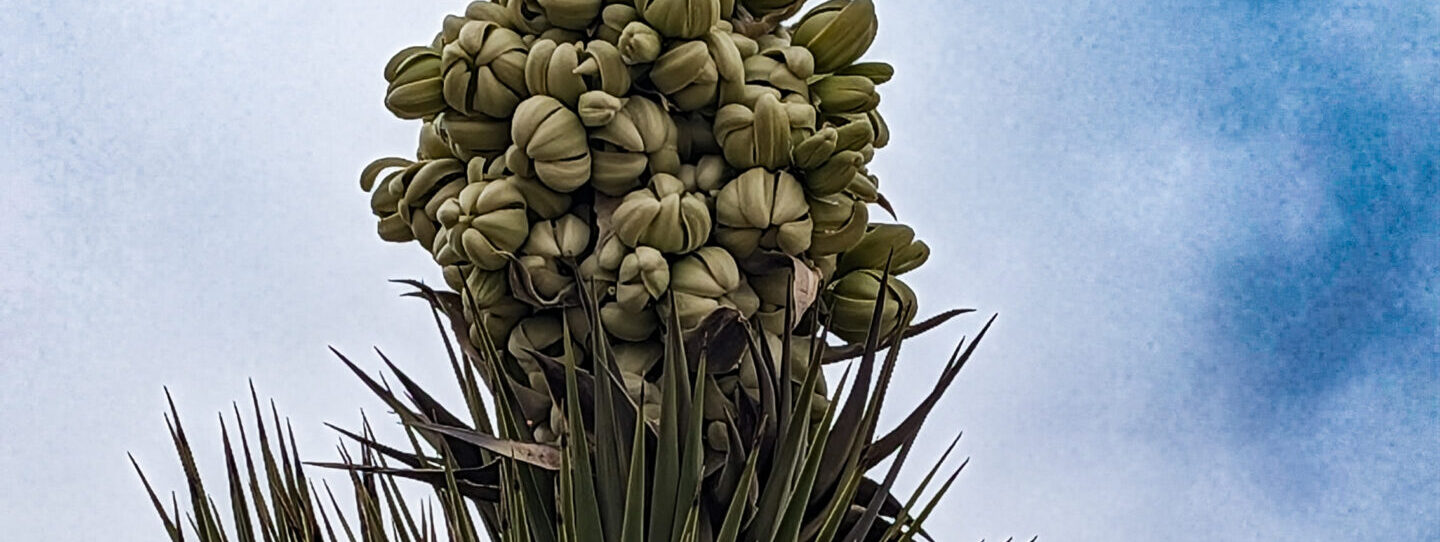
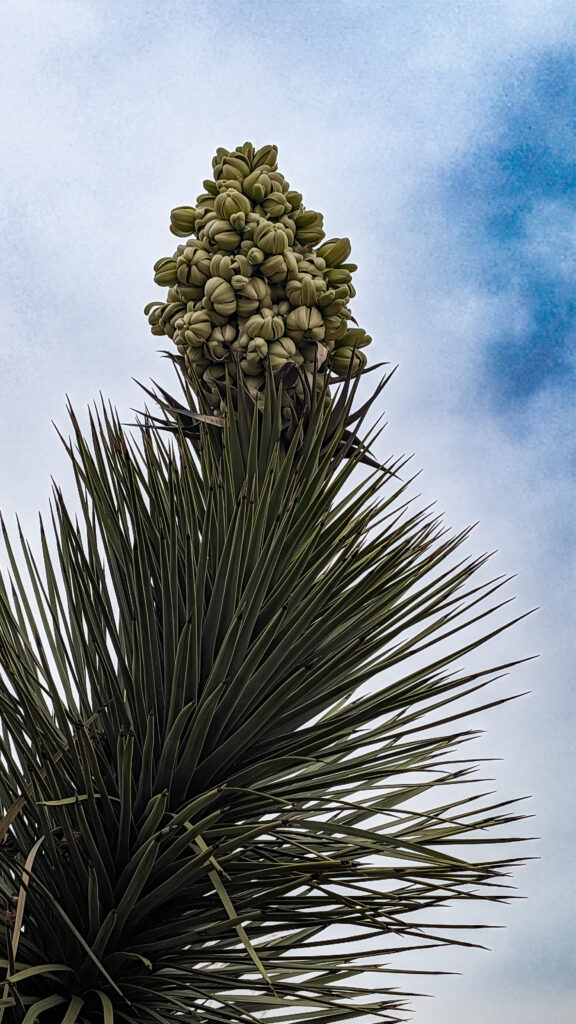
Something weird is happening in the Mojave Desert. Joshua trees are flowering in late October and November instead of their usual late February timing. It might sound like a minor scheduling hiccup, but for scientists studying these iconic plants, it’s raising some serious red flags.
I took this photo of a blooming Joshua tree in January 2026.
The World’s Strangest Partnership
Here’s what makes this so concerning: Joshua trees have one of nature’s most specialized relationships. They can only be pollinated by yucca moths—tiny, rice-grain-sized insects that are just as dependent on the trees as the trees are on them. Scientists call this “obligate mutualism,” which is a fancy way of saying neither can survive without the other.
The system works like clockwork. Adult yucca moths emerge from underground cocoons in late winter, lay their eggs inside Joshua tree flowers (pollinating them in the process), then die. The eggs hatch inside the developing fruit, where the caterpillars munch on some seeds before burrowing back into the soil to wait out the winter. Come spring, the cycle starts over.
For millennia, both species have been perfectly synced up. Until now.
When the Calendar Gets Scrambled
This early flowering is likely triggered by unusual weather. Lancaster, California got two and a half inches more rain than normal this season, with heavy precipitation hitting late in 2025. Research shows Joshua trees are more likely to flower after wet conditions, and a similar off-season bloom happened back in 2018 under comparable circumstances.
But here’s the catch: while rain might wake up the trees, it won’t necessarily wake up the moths. Yucca moths likely use temperature as their cue to emerge, and right now it’s still too cold.
“The real question when the trees flower super early like this is: Are the moths going to show up?” asks Jeremy Yoder, a biologist at California State University, Northridge. So far, it looks like they’re not.
No moths means no pollination. No pollination means no fruit or seeds. And that’s bad news for a species already dealing with climate change, development, and wildfires. Joshua trees need to produce tons of seeds because most get eaten by desert critters before they can grow into new trees—a process that takes over 40 years.
A Preview of Things to Come?
Climate change is making weather patterns more erratic, with bigger swings between wet and dry years. While that might make Joshua trees flower more often, those extra blooms are wasted if they happen at the wrong time. As these kinds of mismatches become more common, species locked into tight partnerships could be in real trouble.
Here’s Where You Come In
Scientists need help tracking what’s happening across the desert, and that’s where citizen science comes in. If you live in or visit the Mojave Desert, you can contribute valuable data by photographing Joshua trees and uploading your observations to iNaturalist.
How to help:
- Download the iNaturalist app (iPhone or Android) or use inaturalist.org
- Join the Joshua Trees and Yucca Moths project
- Snap clear photos of any Joshua trees you encounter—especially ones with flowers or fruit—and upload them to the app
- If you can, come back a few weeks later to see if flowers turned into fruit (which means moths showed up to pollinate)
Your observations help scientists map where early blooms are happening, whether they correlate with rainfall patterns, and if any are actually producing fruit. Researchers especially need data from the northwestern Mojave, Nevada, and western Arizona.
Why It Matters
Joshua trees aren’t just cool-looking plants. They’re indicators of desert ecosystem health, and watching their relationship with yucca moths start to unravel gives us a window into how climate change is reshaping the Southwest.
So next time you’re road-tripping through Joshua Tree National Park or Death Valley, keep your phone handy. Those out-of-season white blooms are beautiful, sure—but they’re also a distress signal from a desert ecosystem trying to adapt to a rapidly changing world.
Sources: